Tuttifonds at German Orchestra Day 2026
06. May 2026
#Solidarity in Action #German Orchestra Day
On 10 May, Franziska Ritter from 1:1 CONCERTS, Johanna-Leonore Dalhoff from the Bridges Chamber Orchestra, sustainability consultant and organisational developer Auli Eberle, and curator, dramaturg and cultural manager Julian Rieken will take part in the 23rd German Orchestra Day. There, they will present the Tuttifonds initiative, with the aim of raising awareness of the initiative within the orchestral community and inspiring new participants to get involved.
The German Orchestra Day is regarded as an industry gathering for orchestras and management – not only in German-speaking countries, but also for interested parties from non-German-speaking nations. As a forum for professional development and dialogue on current and fundamental orchestral topics, dozens of orchestra representatives exchange ideas here every year, thereby forming an important knowledge network. It is the perfect place to present an initiative like this. Will you be attending DOT26? If so, be sure to register for our presentation on 10 May 2026 at 3 pm. Come along and join the discussion!
The Tuttifonds is an independent solidarity project aimed at strengthening and supporting the diverse arts and culture scene. Emerging from the TUNED Network for Contemporary Classical Music of the German Federal Cultural Foundation – at the ideas workshop in Köthen in autumn 2024 – creative professionals from the network came together on their own initiative to discuss the idea of a voluntary 1% levy from cultural institutions for a Tuttifonds. The aim is to establish a procedure that can provide support quickly and easily in emergencies and send a signal against decisions hostile to culture.
What might a fair model for contribution payments look like?
What application and distribution scenarios are conceivable?
How can we create social value without absolving cultural policy of its responsibility? Mitmachen?
These and other questions are discussed in regular online sessions. We meet once a month. New members are always welcome!
Next meeting: Monday 1 June from 6 pm to 7 pm, Zoom Link
Contact: tuttifonds@gmail.com
Initiators
Amadeus Templeton (TONALi gGmbH), Franziska Ritter (1:1 CONCERTS e.V.), Johannes Leuschner (Beethovenfest Bonn), Julian Rieken, Saskia Bladt (tō), Ilka Seifert, Aurelia Georgiou, Johanna-Leonore Dahlhoff (Bridges Kammerorchester), Auli Eberle, Thomas Weißschnur, Rose Hunt, Lorenz Blaumer (Stegreif Orchester), Philipp Krechlak (Deutscher Orchestertag), Tim Vollmann (Musaik – Grenzenlos musizieren e.V.), Rebecca Zimmermann (Stiftung Kulturzukunft Bayern / alma change) und weitere.
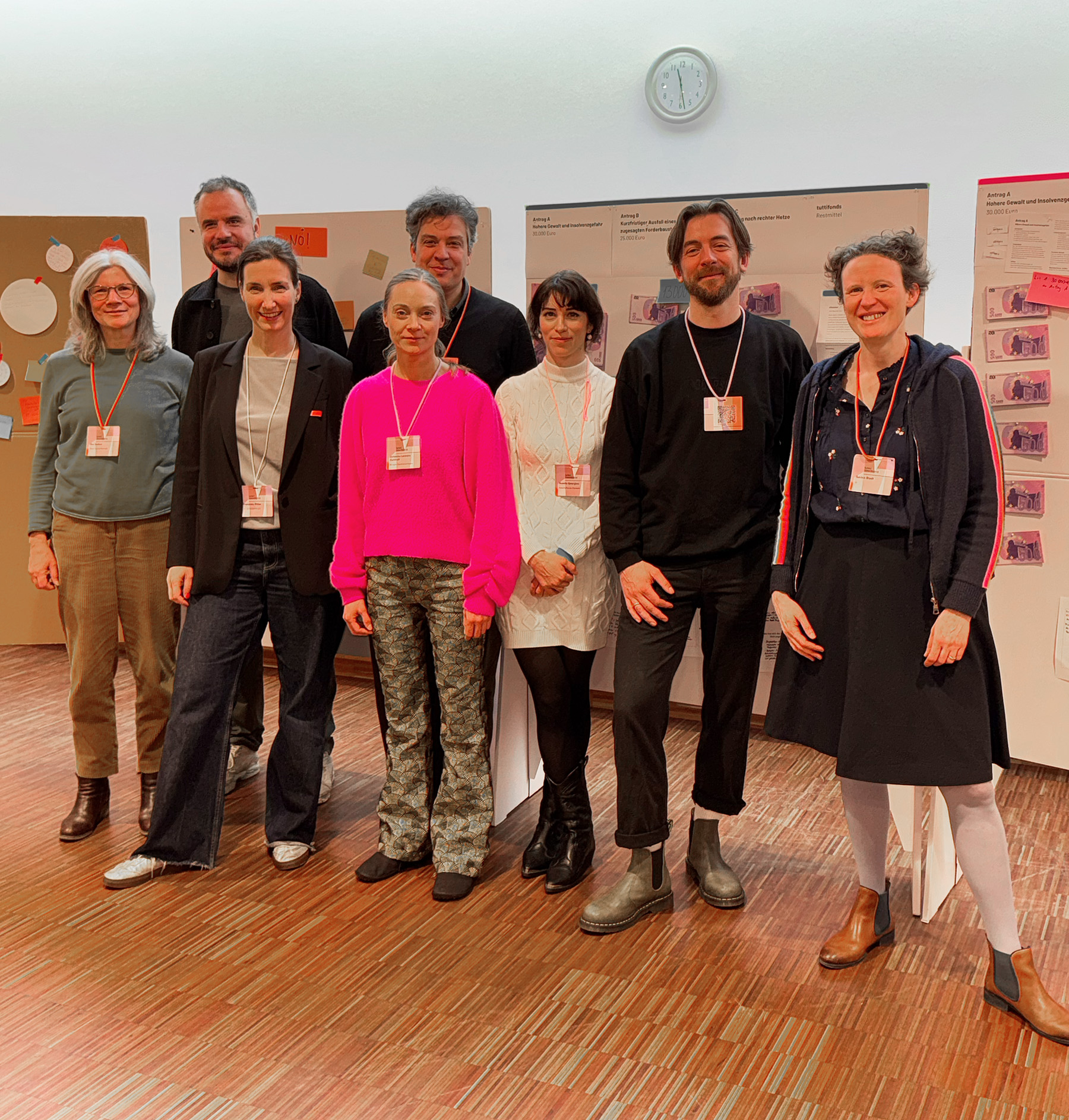
Die Entstehung des Tuttifonds
Background and Context
Political developments in Germany and around the world give cause for concern. Right-wing and neoliberal ideologies are gaining influence, whilst authoritarian governments are deliberately interfering with the freedom of art and culture. The right to freedom of expression and cultural participation is increasingly being curtailed – often insidiously, sometimes quite openly. Where there should be room for openness, diversity, doubt and contradiction, boundaries are being drawn, affiliations defined, and deviations sanctioned and censored. In the US, artworks are being removed because they are too critical; in Hungary, the independent cultural scene has been largely disempowered. In Germany, too, attacks on artists, festivals and institutions are on the rise. By the 2029 federal election at the latest, illiberal forces could further restrict artistic freedom, tie funding to political loyalty and determine what constitutes ‘art worthy of funding’. A cultural policy that replaces freedom with ideology undermines the foundations of an open society. Art is not an ornament, but a touchstone of democracy.
Even today, in some places, the funding that makes art possible is being cut for political reasons. Public funding is shrinking, budgets are being slashed, and projects are being scrapped. These cuts are not merely administrative measures – they send a political message, stating that culture is dispensable and participation is of secondary importance. Free and critical art comes with strings attached. Yet culture must not be allowed to wear itself out through competition. Funding mechanisms that pit artists against one another destroy what we have in common. When the pressure of scarcity forces everyone into survival mode, there is no energy left for a free and diverse cultural landscape.
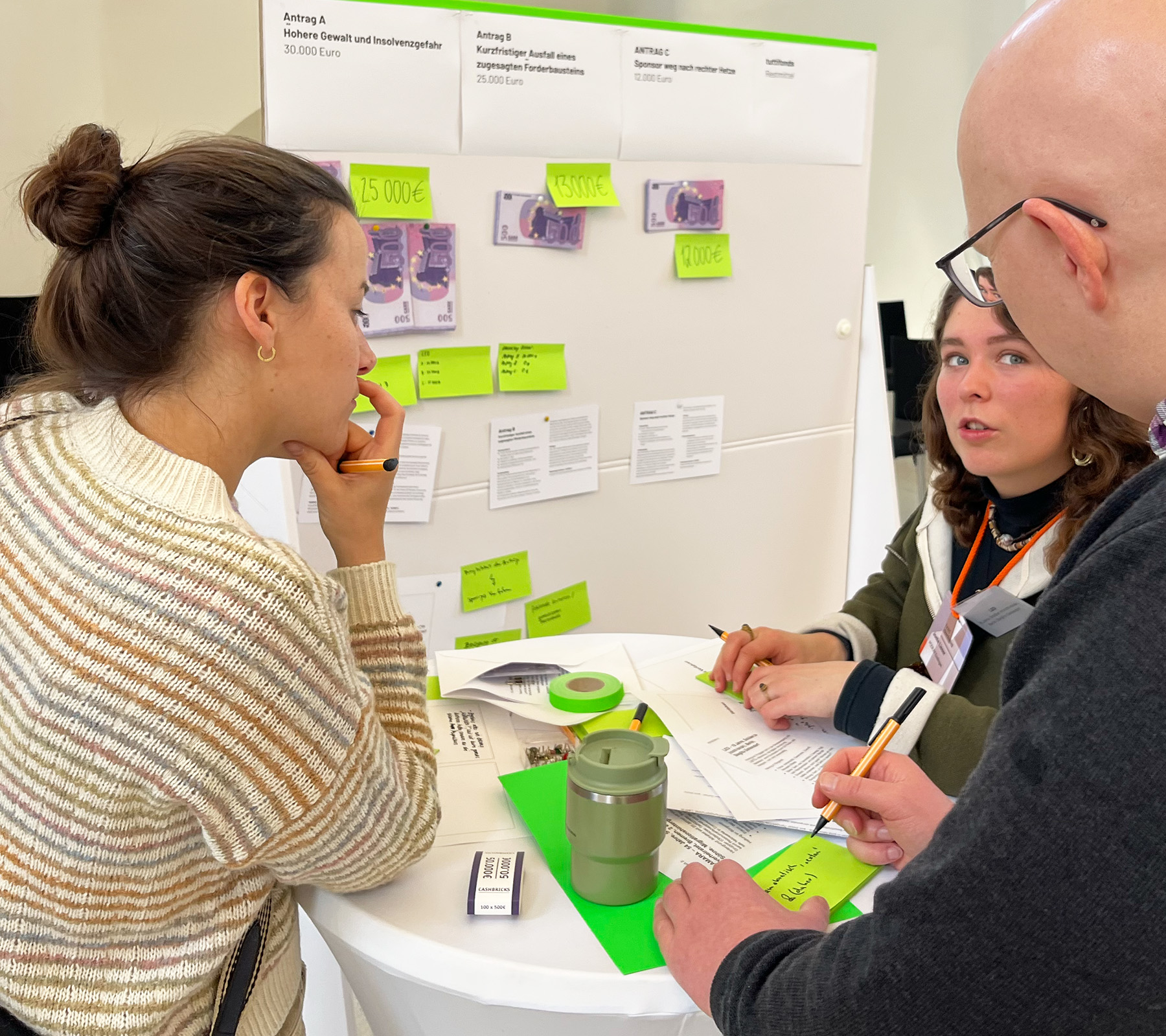
Beim Planspiel auf dem TUNED Ideenfestival in Bochum 2025 testen Teilnehmer:innen verschiedene Vergabeverfahren spielerisch. Hier diskutiert ein unabhängiger Bürgerrat über die Ausschüttung von 50.000 Euro.
Solidarity as cultural resilience
Solidarity is not a state of being, but an action – a verb. Those who ‘show solidarity’ remain passive; those who ‘act in solidarity’ take action, share and intervene. Solidarity is not demonstrated in words and policy documents, but in action. This is where the Tuttifonds comes in: as a blueprint not merely to demand solidarity in the cultural sector, but to embed it structurally. The fund understands solidarity as an activity – as the active sharing, opening up and handing over of resources, power and responsibility. It is about building communities, enabling diversity and remaining open across boundaries.
Solidarity arises where actors are prepared to relinquish privileges, question power relations and actually hand over resources – even when it is uncomfortable. The Tuttifonds is not a welfare fund, but a collective instrument for reshaping capacity for action and responsibility. It lays the foundations for ensuring artistic freedom, cultural diversity and social participation in the long term.
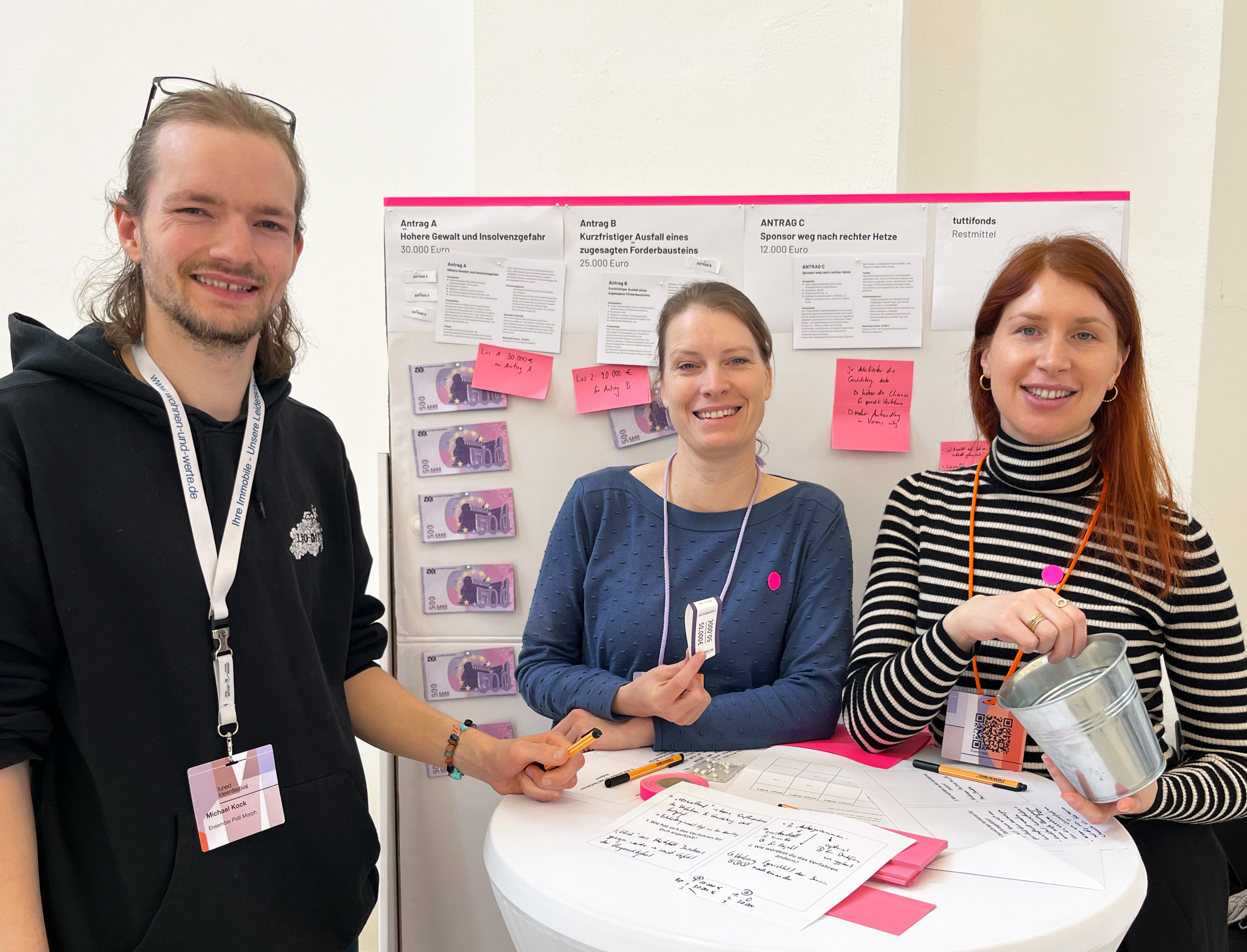
Mit einem gewichteten Losverfahren lassen sich 50.000 Euro schneller verteilen, aber ist es auch fairer?